medDARE Case studies

title
title
title

Accelerating your AI Success

Explore
The client approached medDARE to assemble an expert team of radiologists capable of performing high-quality data annotation for brain MRI scans. The project required experienced professionals who could ensure clinical accuracy and consistency to meet regulatory standards.
medDARE was approached by a leading US healthcare AI company to support the collection of laparoscopic hernia surgery videos. The primary goal was to create a dataset suitable for training and validating AI systems for procedure recognition and analysis.
A healthcare AI startup specializing in radiology software partnered with medDARE to strengthen its breast MRI–based diagnostic models. The client required large-scale, high-quality data annotation that would align directly with radiological reports and clinical ground truth.
A healthcare startup developing AI-based diagnostic tools for CT scans approached medDARE with an urgent request. The company had already developed its disease detection software and required oncology staging CT scans to validate its performance across different manufacturers.
medDARE finalized a joint data collection and annotation project focused on prostate cancer detection. Through projects like this, we partner with healthcare providers to collect and annotate high-quality medical imaging data, empowering AI tools to detect prostate cancer with greater precision.
medDARE partnered with an AI healthcare startup to deliver over 2,000 expertly annotated chest CT scans for training and validating a computer-aided detection system targeting lung diseases. The project involved precise segmentation of a wide range of pulmonary pathologies, enhancing the client's AI model accuracy and clinical reliability.
medDARE team delivered a dataset of 250 curated brain MRI cases featuring hyperacute ischemic strokes caused by large vessel occlusions (LVOs). The cases focused on occlusions in the intracranial internal carotid artery (ICA), proximal segments of the PCA, MCA, and ACA, as well as the intracranial vertebral artery (VA) and basilar artery (BA).
medDARE team conducted detailed skeleton annotation of the videos, enabling precise analysis of people’s movements and interactions. This structured approach ensured high-quality, privacy-compliant data for advanced AI model training.
medDARE team worked not just as an annotation services provider, but as a collaborative partner —offering expert clinical input, adapting quickly to changing requirements, and helping refine internal annotation protocols.
medDARE team was hired to meet several goals. Firstly, the client needed to collect 50 hours of surgical videos from diverse geographies, focusing on specific pathologies and surgical contexts. Then, these video frames were annotated by certified doctors, with focus on detecting and categorizing surgical instruments.
The client’s request was that the metadata, which is not personal, didn’t have to be anonymized. Anonymized data means that the data does not include any “personal data” as defined in the EU General Data Protection Regulation 2016/679 (the “GDPR”).
medDARE team collected videos from multiple hospital sites and needed software to automatically detect faces and screens and blur them. Computer screens, documents, signage, location indicators and other details constitute personal data that can lead to privacy breaches.
medDARE team provided data curation of 150 raw cranial CT scans with brain metastases stemming from all kinds of primary tumors, meningiomas, cranial/paracranial nerve tumors, etc.
medDARE team provided data collection of full spine X-Rays. The field of view extended from the cervicocranial junction to the proximal femurs.
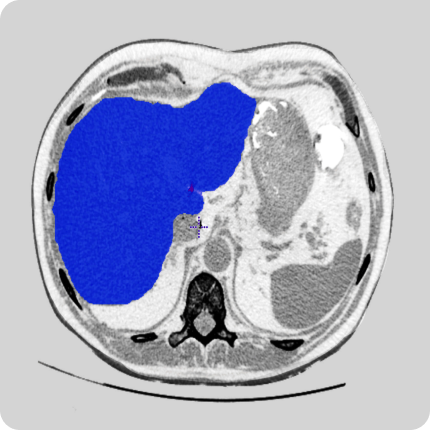
medDARE team provided data annotation of 500 pelvic CT scans. The task was to annotate femur and pelvic bones in the images.

Want to know how we can accelerate your AI success?

Get a quote