










Medical AI Data FAQ


Accelerating your AI success
Explore1. Healthcare Data & AI Fundamentals
What is medical data collection for AI?
Medical data collection for AI is the process of getting access to healthcare data that can be used to train, validate, and evaluate artificial intelligence models. Depending on the project, the data may include medical images, clinical records, surgical videos, pathology slides, or other healthcare information. Collected data is often organized, reviewed, and prepared before it can be used in AI development.
Why is healthcare data important for AI development?
Healthcare AI systems learn patterns from data. The quality, diversity, and relevance of the data directly influence how well a model performs. High-quality healthcare data helps AI systems identify meaningful clinical patterns, while poor-quality or unrepresentative data can reduce model reliability and generalization.
What types of healthcare data can be used for AI?
Healthcare AI can be developed using many types of data, including medical images, surgical videos, pathology slides, electronic health records, laboratory results, genomic data, and patient-reported information. Different AI applications may rely on one data type or combine multiple sources to support more complete analysis.
What makes a medical dataset AI-ready?
An AI-ready medical dataset is organized, relevant to the intended use case, and prepared for machine learning workflows. This often includes data cleaning, quality review, annotation, metadata organization, and de-identification or anonymization when appropriate. The dataset should also contain sufficient diversity and reflect the population or clinical setting the AI model is intended to address.
What is multimodal healthcare data?
Multimodal healthcare data combines multiple types of medical information within a single dataset or analysis workflow. Examples include combining medical images with clinical records, pathology findings, laboratory results, genomic data, or surgical videos. Multimodal datasets can provide a more complete representation of patient information and support advanced AI applications.
What is dataset bias in healthcare AI?
Dataset bias occurs when a dataset does not adequately represent the population, conditions, devices, or clinical scenarios that an AI model will encounter in real-world use. Bias can affect model performance across different patient groups or settings and may limit generalization. Careful dataset design, curation, and evaluation can help identify and reduce bias.
How much data is needed to train a healthcare AI model?
The amount of data required depends on the complexity of the task, the variability of the data, the type of model, the quality of annotations, and the expected performance target. Some projects may require hundreds of cases, while others may require thousands or more. Data quality, relevance, and diversity are often as important as dataset size.
How do healthcare AI startups obtain training data?
Healthcare AI startups may obtain training data through research collaborations, healthcare institutions, public datasets, data-sharing partnerships, prospective collection initiatives, or combinations of these approaches. The most appropriate strategy depends on the AI use case, data type, required volume, quality requirements, and project objectives.
2. Medical Image & Video Data Collection
What is medical image data collection?
Medical image data collection is the process of acquiring imaging studies for research, analytics, or artificial intelligence development. Collected data may include CT scans, MRI scans, X-rays, ultrasound studies, mammograms, PET/CT scans, digital pathology images, and other medical imaging modalities.
What imaging modalities are commonly used in healthcare AI?
Common imaging modalities used in AI development include computed tomography (CT), magnetic resonance imaging (MRI), X-ray, ultrasound, mammography, positron emission tomography (PET), digital pathology slides, ophthalmic imaging, and other specialized imaging techniques. The appropriate modality depends on the clinical question and intended AI application.
What is the difference between retrospective and proactive image collection?
Retrospective collection uses existing imaging studies that have already been acquired, while proactive collection gathers new data for a defined project. Retrospective collection may provide faster access to data, while proactive collection allows greater control over study design, protocol consistency, and dataset composition.
What is DICOM?
DICOM, or Digital Imaging and Communications in Medicine, is the international standard used to transmit, store, retrieve, process, and display medical imaging information. DICOM files typically contain both image data and metadata, enabling interoperability between imaging devices, PACS, workstations, archives, and healthcare systems.
Can AI models be trained directly on DICOM files?
AI models can use data extracted from DICOM files, but preprocessing is usually required. DICOM images may need conversion, metadata handling, de-identification, and quality checks before they are suitable for model training. The exact workflow depends on the model architecture and imaging modality.
What is medical video data collection?
Medical video data collection is the process of acquiring healthcare-related video recordings for research, analytics, education, or artificial intelligence development. Examples include surgical procedures, endoscopic examinations, ultrasound videos, microscopy recordings, and other clinical recordings that capture medical workflows or patient care activities.
What types of medical videos can be used for AI development?
Healthcare AI projects may use surgical videos, endoscopy recordings, laparoscopy videos, arthroscopy videos, robotic surgery recordings, ultrasound videos, microscopy recordings, ophthalmology videos, and other procedure-based clinical video sources. The best video type depends on the AI task and clinical domain.
What is surgical video data?
Surgical video data consists of recordings captured during surgical procedures. These videos may document an entire procedure or specific operative phases and are commonly used for surgical education, workflow analysis, computer vision research, instrument recognition, and AI development.
What is endoscopic video data?
Endoscopic video data is generated during procedures that use an endoscope to visualize internal organs and anatomical structures. Examples include gastrointestinal endoscopy, bronchoscopy, cystoscopy, and other scope-based procedures. Endoscopic videos are often used for AI applications involving detection, classification, segmentation, and procedural analysis.
How can video quality affect AI model performance?
Video quality influences the ability of AI models to identify relevant visual features. Resolution, compression artifacts, motion blur, poor lighting, smoke, blood, lens contamination, and image noise can reduce model accuracy or make annotation more difficult.
3. Medical Data Annotation
What is medical data annotation?
Medical data annotation is the process of labeling healthcare data so it can be used to train, validate, and evaluate artificial intelligence models. Annotation may be applied to medical images, videos, pathology slides, clinical text, physiological signals, and other healthcare data sources.
Why is annotation important for healthcare AI?
Annotation provides reference information that AI models learn from during training. Accurate annotations help models identify clinically meaningful patterns, while poor-quality or inconsistent annotations can negatively affect model performance, evaluation, and reliability.
What is ground-truth annotation?
Ground-truth annotation refers to labels that serve as a reference standard for AI model development and evaluation. Ground truth may be based on expert review, consensus annotation, pathology findings, clinical outcomes, laboratory results, or other trusted sources of information.
What is image segmentation?
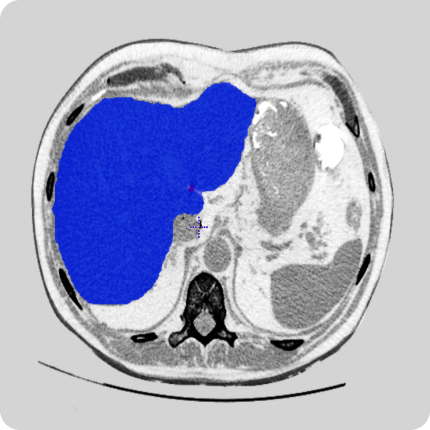
Image segmentation is an annotation technique that identifies specific regions within an image, often at the pixel or voxel level. In healthcare AI, segmentation is commonly used to outline organs, tumors, lesions, blood vessels, and other anatomical structures.
What are bounding box annotations?
Bounding box annotations use rectangular boxes to identify the approximate location of structures or findings within an image. Bounding boxes are commonly used for object detection tasks because they can be faster to create than detailed segmentation masks.
What are landmark annotations?
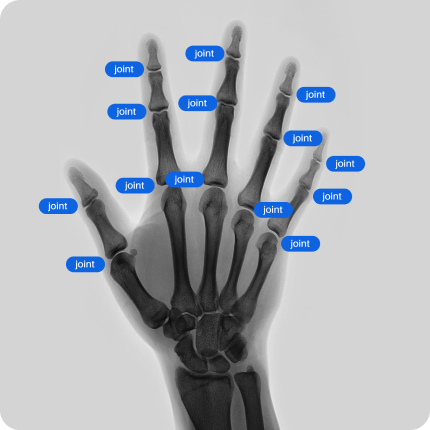
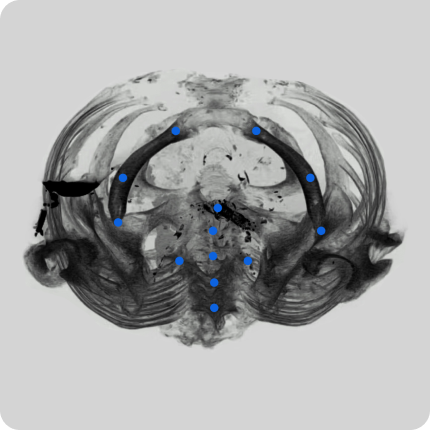
Landmark annotations identify specific anatomical points within an image. These annotations are often used in applications involving anatomical measurements, image registration, surgical planning, pose estimation, and shape analysis.
What is medical video annotation?
Medical video annotation is the process of labeling events, objects, actions, phases, instruments, or anatomical structures within video recordings. Video annotations help AI systems learn temporal patterns and procedural workflows.
What is temporal annotation?
Temporal annotation labels events or activities according to when they occur within a video. Examples include identifying the start and end of surgical phases, instrument usage periods, or clinically significant procedural events.
How is annotation quality measured?
Annotation quality may be evaluated through expert review, agreement analysis, consistency checks, quality audits, and comparison against established reference standards. High-quality annotations improve the reliability of AI training and evaluation.
What is inter-rater agreement?
Inter-rater agreement measures the level of consistency between multiple annotators who label the same data. Higher agreement generally indicates clearer annotation criteria and greater confidence in the resulting labels, although expert adjudication may still be needed for complex cases.
4. Medical Data Curation & Management
What is medical data curation?
Medical data curation is the process of organizing, reviewing, cleaning, and preparing healthcare data for research, analytics, or artificial intelligence development. Curation helps improve dataset quality, consistency, usability, and relevance for the intended application.
What is the difference between data collection and data curation?
Data collection focuses on acquiring healthcare data, while data curation focuses on preparing that data for use. Collection answers where the data comes from, while curation addresses how the data is organized, reviewed, cleaned, standardized, and optimized for a specific purpose.
What is dataset harmonization?
Dataset harmonization is the process of improving consistency across data collected from different sources, institutions, devices, or protocols. Harmonization helps reduce unwanted variability and supports more reliable analysis, comparison, and AI model development.
What is dataset balancing?
Dataset balancing is the process of managing the distribution of cases within a dataset to avoid excessive overrepresentation or underrepresentation of specific categories. Balanced datasets can help reduce bias and improve model performance across different classes or subgroups.
What is dataset partitioning?
Dataset partitioning is the process of dividing data into separate subsets for training, validation, and testing. These partitions allow researchers to train models, tune parameters, and evaluate performance using data that was not used for model fitting.
Why are separate training, validation, and test datasets important?
Using separate datasets helps reduce the risk of overestimating model performance. Independent validation and testing provide a more realistic understanding of how an AI model may perform on new data and can help detect overfitting.
What is dataset versioning?
Dataset versioning is the practice of maintaining identifiable versions of datasets as changes occur. Versioning helps teams track updates, reproduce results, compare experiments, and understand which data was used during specific stages of AI development.
What is model drift?
Model drift occurs when an AI model’s performance changes over time because the data or environment encountered during use differs from the data seen during development. Monitoring helps identify drift and determine whether a model requires review or updating.
5. Medical Data Anonymization & Compliance
What is medical data anonymization?
Medical data anonymization is the process of removing, obscuring, or transforming information that could identify an individual. The goal is to reduce the presence of identifying information while preserving the usefulness of the data for research, analytics, or AI development.
Why is anonymization important in healthcare AI?
Healthcare datasets may contain information that directly or indirectly identifies individuals. Anonymization or related de-identification workflows help reduce the presence of identifying information and support responsible use of healthcare data in research, analytics, and AI development.
What is medical image anonymization?
Medical image anonymization is the process of removing or modifying identifying information associated with medical images. This may involve processing metadata, image overlays, burned-in text, facial features in certain imaging types, or other elements that could reveal personal information.
What is medical video anonymization?
Medical video anonymization is the process of reducing identifying information that may appear within clinical or surgical videos. This can involve blurring faces, displays, overlays, voice information, timestamps, institutional identifiers, or other potentially identifying elements.
What is DICOM anonymization?
DICOM anonymization refers to the removal, replacement, or modification of identifying information contained within DICOM files. This process often focuses on metadata fields but may also address identifying information embedded within image pixels, overlays, or related files.
How are faces anonymized in medical videos?
Faces may be anonymized using techniques such as masking, blurring, pixelation, replacement, or automated computer vision algorithms that detect facial regions and obscure identifying features. Manual review is often used to check difficult or high-risk scenes.
What is re-identification risk?
Re-identification risk refers to the possibility that an individual could be identified by combining available information from one or more data sources. Managing re-identification risk is an important consideration when preparing healthcare data for research, analytics, or AI development.
What is the difference between anonymization and pseudonymization?
Anonymization aims to remove or transform identifying information so individuals cannot reasonably be identified from the resulting data. Pseudonymization replaces direct identifiers with codes or alternative values while maintaining a controlled way to reconnect the data when authorized.
6. Healthcare AI Development & Evaluation
What is healthcare AI software development?
Healthcare AI software development is the process of designing, building, testing, and maintaining software systems that use artificial intelligence to analyze healthcare data or support healthcare-related tasks. Applications may involve medical imaging, surgical video analysis, clinical documentation, workflow optimization, research analytics, or operational decision support. Development usually requires clear problem definition, suitable datasets, model evaluation, and integration planning.
What are the stages of healthcare AI development?
Healthcare AI development commonly includes problem definition, dataset acquisition, data preparation, annotation, model development, validation, testing, deployment planning, monitoring, and ongoing improvement. The exact workflow depends on the intended application, available data, and the environment where the system will be used.
How are healthcare AI models evaluated?
Healthcare AI models are evaluated using predefined metrics and datasets that were not used for model training. Evaluation helps determine how accurately, consistently, and reliably a model performs the intended task under defined conditions. Strong evaluation often includes testing across relevant patient groups, settings, and data sources.
What is external validation?
External validation evaluates an AI model using data that was not involved in model development and comes from different sources, populations, institutions, equipment, or environments. External validation helps assess whether model performance generalizes beyond the development dataset.
What is model generalizability?
Model generalizability is the ability of an AI model to maintain performance when applied to new data that differs from the training dataset. A generalizable model is more likely to perform consistently across different patient populations, institutions, devices, acquisition protocols, and clinical environments.
What challenges occur when deploying healthcare AI?
Common deployment challenges include data variability, workflow integration, interoperability, user adoption, performance monitoring, scalability, model drift, and maintaining consistent performance across environments. Deployment also requires attention to documentation, feedback loops, and ongoing quality monitoring.